

Looking specifically for things to do on Koh Samet?
This guide covers travel and activities across Koh Samet, Koh Chang, Koh Kood and Koh Mak.
For a detailed Samet plan, see our 👉 4-Day Koh Samet Itinerary
Thailand’s Hidden Backpacker Trail: Koh Samet, Koh Chang, Koh Mak & Koh Kood
Everyone knows the southern Thailand circuit: fly to Phuket, bounce around Koh Phi Phi, collapse on Koh Samui. It’s popular for a reason — but popular also means expensive flights, packed beaches, and the nagging feeling you’re seeing Thailand through a tourist filter.
There’s a quieter route. One that starts with a cheap bus from Bangkok and takes you through four very different islands — each with its own character, each far less visited than its southern equivalents. This is Thailand’s Eastern Seaboard backpacker trail: Koh Samet → Koh Chang → Koh Mak → Koh Kood.
No flights needed. No checked baggage fees. No fighting for a patch of sand. Just a logical, affordable, genuinely beautiful island-hop that most travellers completely overlook.
Why This Trail Beats the Southern Islands
| Factor | Southern Islands | Eastern Seaboard Trail |
|---|---|---|
| Getting there | Budget flight (฿1,500–3,000+) + baggage fees + ferry | Bus from Bangkok (~฿200) + short ferry |
| Crowds | Heavy, especially Dec–Mar | Light to moderate |
| Island variety | Similar party-beach vibe throughout | 4 distinct island personalities |
| Authenticity | Heavily commercialised | More local, less filtered |
| Island-hopping | Requires flights or long ferries | Short scenic ferry hops |
| Overall cost | High throughout | Budget-friendly throughout |
The eastern route also has a geographic logic to it. Each island is a short hop from the last, so you move at your own pace without backtracking or booking flights.
The Route at a Glance
Bangkok → Koh Samet → Koh Chang → Koh Mak → Koh Kood
Each leg is manageable in a single day. The full trail suits 1–2 weeks depending on how long you linger. Most travellers spend 2–4 nights on each island.
Step 1: Bangkok to Koh Samet
For a full step-by-step breakdown, see our complete Bangkok to Koh Samet guide.
The first leg is the easiest. Buses leave from Ekkamai Bus Terminal (BTS Ekkamai) throughout the day. The journey to Ban Phe takes roughly 3–3.5 hours and tickets cost around ฿130–200. On weekends and Thai public holidays, services fill up — booking ahead is worth it.
Check prices and route options for Bangkok to Ban Phe below
Once at Ban Phe, several ferry operators run boats to Koh Samet’s Na Dan Pier. The slow boat costs around ฿70 and takes 30 minutes. Speedboats cost around ฿150-200 and get you there in 10 minutes. Both work fine — the slow boat is more relaxing if you’re not in a rush. For a full breakdown of operators, timings, and which pier to use, see our Ban Phe to Koh Samet ferry guide.
Koh Samet — The Relaxed Opener
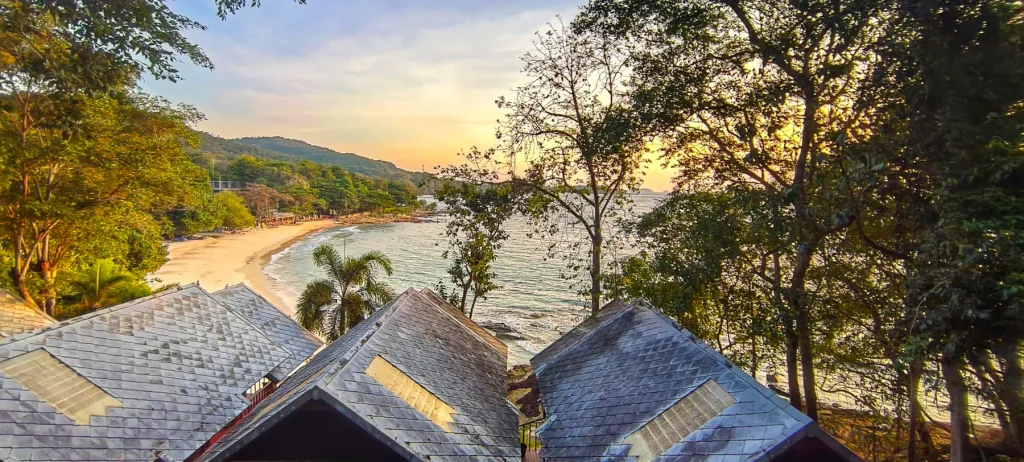
Koh Samet is the natural first stop on the eastern trail — and arguably its most underrated island. Just three hours from Bangkok, it sits inside a national park, which means development has stayed controlled and the beaches have stayed genuinely good. We have written a full Koh Samet guide here.
It’s a small island, which works in your favour. Na Dan Pier drops you almost directly onto the beach strip, and within an hour of arriving you can have a sun lounger, a cold drink, and a view of the Gulf of Thailand. There’s no acclimatisation period required.
The main beach strip runs south from Hat Sai Kaew — the busiest and most social stretch — through Ao Hin Khok and Ao Phai, which are quieter and better suited to people who want to read a book rather than find a party. Ao Wai and the bays further south get progressively more peaceful. The island suits almost every travel style, which is rare. We wrote a detailed guide to Koh Samet’s beaches you can find here.
Koh Samet also has one practical advantage the other islands on this trail don’t: it sits in a rain shadow. It stays drier than the rest of the Gulf coast year-round, which makes it a reliable choice even in low season.
Three or four nights is enough to get a real feel for the island. If you’re staying on Koh Samet, The Cocoon Hostel is the highest-rated hostel on the island — a short walk from the pier and close to the main beaches.
Step 2: Koh Samet to Koh Chang
After Koh Samet, your next stop is Koh Chang — Thailand’s second-largest island. Getting there requires a bit more planning than the first leg, so it’s worth knowing your options before you leave.
The easiest way: book online in advance
The simplest option is to book your journey online before you travel. Use the search tool below to find a through-ticket from Ban Phe to Koh Chang — most options include the ferry crossing and a transfer to your hotel on Koh Chang, so everything is arranged in one go and you arrive without the usual hassle of figuring out connections on an unfamiliar island.
Check prices and route options from Ban Phe to Koh Chang below
Sort it yourself: the budget route
If you’d prefer to keep costs down and don’t mind a bit of legwork, you can piece the journey together at the pier. From Ban Phe, you’ll need to reach the Aow Thammachat ferry terminal near Trat — either by catching the public bus to Trat and then a songthaew to the pier, or by arranging a private minibus. The ferry to Koh Chang costs around ฿80 and runs frequently. From the Koh Chang ferry pier you’ll then need to sort your own transfer to your accommodation. It’s slightly cheaper, but you’re managing each stage independently.
Booking through the pier touts
A third option is to book through one of the touts working the Ban Phe Pier area. They’ll put a package together on the spot and it can work out fine, but prices and what’s included vary — worth checking against the online price first before committing.
The total journey is roughly 3.5–4 hours however you travel. For most people, booking online in advance is worth the small price difference. The other options are there if you want them, but they suit travellers who are comfortable navigating local transport connections on the fly.
Koh Chang — The Island of Contrasts
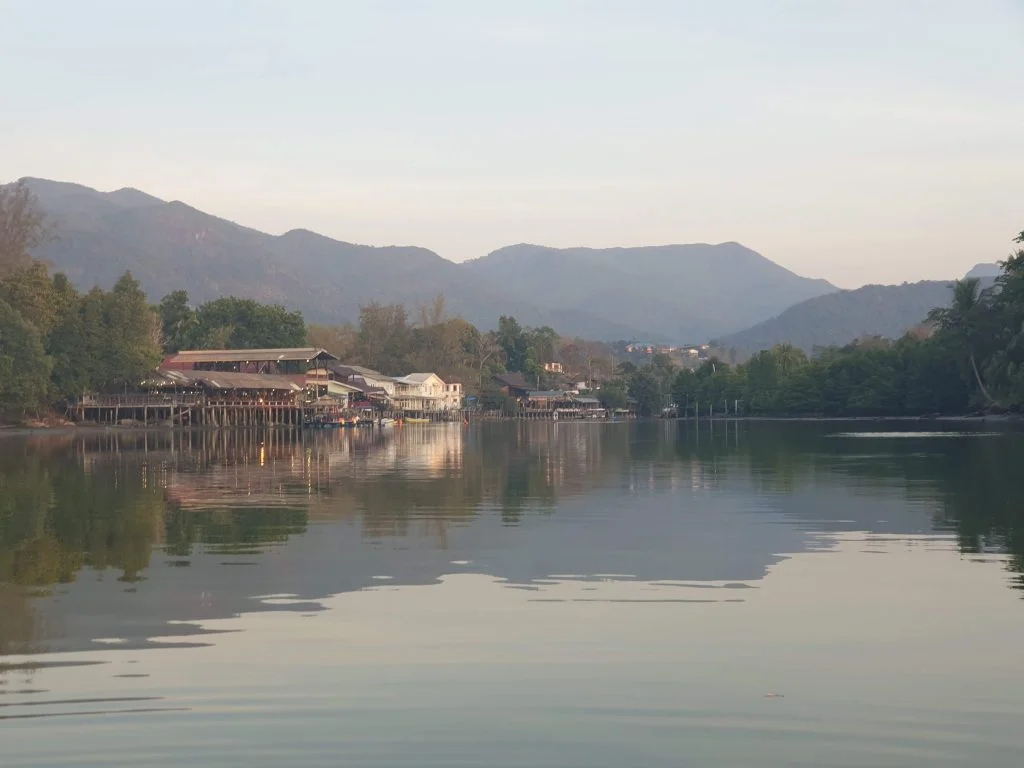
Where Koh Samet is compact and calm, Koh Chang is big, mountainous, and diverse. The west coast has distinct zones with very different personalities. White Sand Beach is the most developed and social. Khlong Phrao (pictured) is quieter and more mid-range. Kai Bae has a fantastic bar and restaurant street. Lonely Beach is the cheapest, most laid-back, and the traditional backpacker hub of Koh Chang.
Beyond the beaches, the island has proper jungle — waterfalls, trekking trails, kayaking rivers, and elephant sanctuaries. It’s the kind of place where you can fill a week without much effort.
Step 3: Koh Chang to Koh Mak
Boats to Koh Mak depart from Bang Bao Pier or Kai Bae on Koh Chang. Prices typically range from ฿500–1,000 depending on the time of year and whether you take a slow boat or speedboat. Some packages include hotel transfers on both sides, which can save a lot of hassle on an unfamiliar island — check what’s included when you book.
See current prices and availability for Koh Chang to Koh Mak below.
Koh Mak — The Quiet Escape
Koh Mak is a small, flat island with a genuine commitment to keeping tourism low-impact. No large resorts, no loud bars, no real traffic. What you get instead: calm turquoise water, coconut groves, and a slow rhythm that’s increasingly hard to find in Thailand.
The island is roughly 16 square kilometres — small enough to loop by bicycle in an afternoon, which is exactly how most people get around. Roads are quiet enough that cycling feels meditative rather than hazardous. Ao Kao beach on the northwest coast is the main hub, lined with a handful of relaxed restaurants and small guesthouses. Ao Suan Yai on the opposite side is wider, emptier, and better for swimming.
The snorkelling around the island’s southern tip and nearby islets is genuinely good — visibility tends to be better here than on the more trafficked islands to the north. Most guesthouses can arrange equipment rental and longtail trips to the surrounding reefs. Kayaking is another popular option, and the flat coastline makes it accessible for all levels.
It suits travellers who want to read, swim, and actually rest — rather than performing a beach holiday. The food is simple and fresh, the sunsets are quietly excellent, and the near-total absence of nightlife is a feature rather than a flaw. By this point in the trail, most people are ready for it.
Step 4: Koh Mak to Koh Kood
Boats run from Koh Mak directly to Koh Kood, or you can go from Bang Bao Pier on Koh Chang if you’re skipping Koh Mak. Speedboats from Koh Mak take around 45 minutes. Wooden boats take longer but cost less.
See current prices and availability for Koh Mak to Koh Kood below.
Koh Kood — Pristine and Off the Map
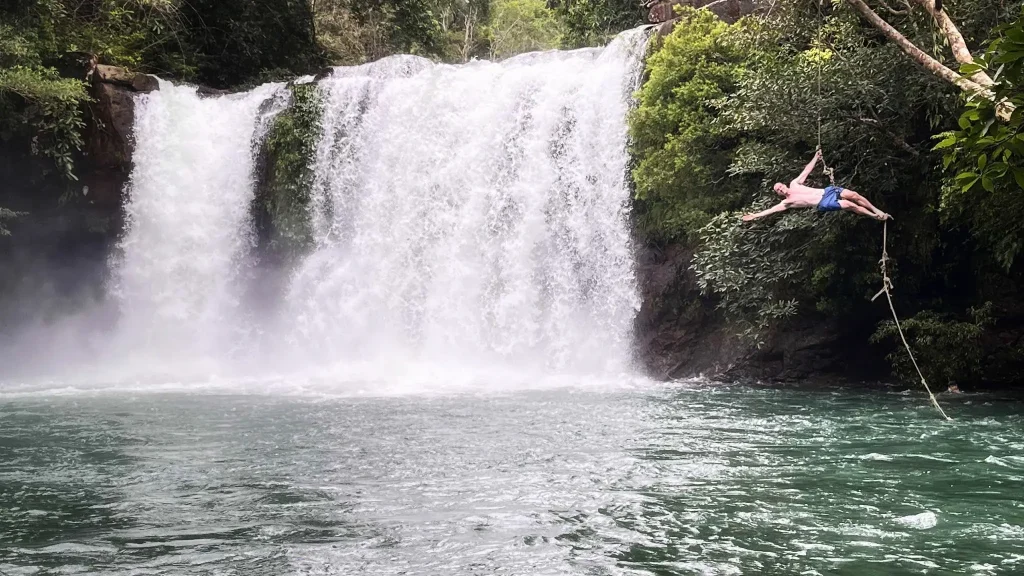
Koh Kood (also written Koh Kut) is the end point of the trail and the most untouched of the four islands. It’s Thailand’s fourth-largest island, but development is minimal — thick jungle, serious waterfalls, and water that’s genuinely clear.
The west coast has the best beaches, and they’re among the finest in the country. Ao Phrao and Ao Tapao are wide, tree-lined, and rarely crowded even in peak season. The water shifts through several shades of green and blue depending on the light, and the sand stays clean because there simply aren’t enough visitors to disturb it.
Nam Tok Khlong Chao waterfall is the island’s most visited attraction and worth the trip on its own. It’s a short ride inland from the main beach area — the cascade drops into a natural pool where you can swim, and the surrounding jungle makes the whole thing feel genuinely remote. Nam Tok Khlong Yai Kee is smaller and harder to reach, which means you’ll likely have it to yourself.
There are no 7-Elevens. The pace is slow by necessity, not affectation. Connectivity is patchy, which most people discover is a relief after a few hours. Koh Kood rewards travellers who’ve done the legwork to get there. By the time you arrive, you’ve earned the quiet.
Heading Home
The easiest way to get back to Bangkok is to book your bus and boat together in one go. Expect to pay somewhere in the region of ฿1,000–1,300 depending on the season and operator — it gets you from Koh Kood to Bangkok stress-free without having to arrange each leg separately. Check current prices and availability below.
See current prices and availability for Koh Kood to Bangkok below.
FAQ
Is this trail suitable for solo travellers?
Yes. It’s a well-established independent route, just far less crowded than the southern circuit. Solo travellers will find the most social opportunities on Koh Samet and Koh Chang. Koh Mak and Koh Kood are quieter — ideal if you want solitude rather than a social scene.
What’s the best time of year?
November to April is peak season — dry weather, calm seas, all ferries running reliably. May to October brings more rain and occasional rough water, but prices drop and crowds thin. Koh Samet sits in a rain shadow and stays drier than the other islands year-round, making it a good choice even in low season.
How long does the full trail take?
A minimum of 7–10 days if you move quickly. Two to three weeks is more comfortable — 3–4 nights on Koh Samet and Koh Chang, 2–3 nights each on Koh Mak and Koh Kood.
Do I need to book ferries in advance?
The Bangkok to Ban Phe bus is worth booking ahead, especially on weekends. Most island ferries can be bought at the pier on the day. The 12go widgets on this page let you check schedules and book online if you’d rather have a confirmed seat.
Is this route budget-friendly?
Very. The Bangkok bus costs around ฿200. Island ferries range from ฿70 to ฿900 depending on speed and distance. Accommodation, food, and activities on all four islands are significantly cheaper than the southern islands. You don’t need to fly anywhere.
Start Your Trail at The Cocoon Hostel
Koh Samet is the natural first stop on this route — and The Cocoon is the highest-rated hostel on the island. We’re a short walk from Na Dan Pier, so you can drop your bags and be on the beach within minutes of arriving.
